
Install TagSpaces file organizer on Ubuntu. An Evernote alternative for Linux Ubuntu, TagSpaces is an offline data and file manager for Linux Ubuntu Systems. It helps you organize files on your Linux, Windows, Android or Mac. TagSpaces is very easy to use. There is no backend, no Login required or no cloud storage either. TagSpaces is running completely offline on your computer, smartphone or tablet and does not require internet connection or online registration. You can still use platforms like Nextcloud, Dropbox or Syncthing in order to sync your files between devices.
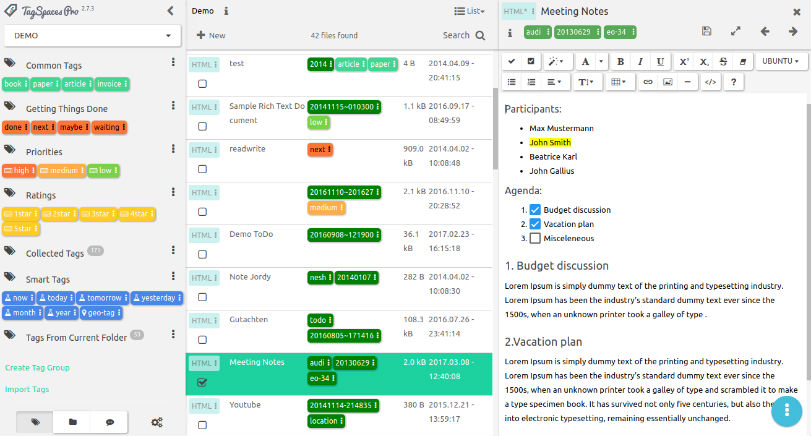
TagSpaces support cross-platform file tagging and finding:
- Organize your photos, ebooks, music, recipes or invoices in the same way on almost every platform. We currently support Windows, Linux, Mac OS X, Android, Firefox and Chrome
With the help of tags you can do research better or you can manage projects using the GTD methodology. - The application persists the tags in the file names. As a consequence, the tagging information is not vendor locked and can be used even without the TagSpaces application. The absence of a database, makes syncing of the tag meta information easy across different devices with services like Dropbox.
- TagSpaces features basic file management operations, so it can be used as tag-based file manager.
It also brings note taking and information management features:
- TagSpaces products can be used as alternative for Evernote’s note taking and webscrapping functionalities.
- You can create and edit notes in plain text, MARKDOWN or HTML file formats.
- With our webclippers for Chrome and Firefox you can save webpage content in HTML or MHTML formats for later use.
- You can use TagSpaces to organize your e-book library, containing for example PDF or EPUB documents.
- You can create To-Do lists and organize them in a kind of offline personal wiki for tracking your projects, ideas or memories.
Using TagSpaces, users can navigate and preview the local files and folders in one application:
- Browse your file system in a convenient and responsive user interface, familiar from the modern cloud based file storage services.
- Browse your digital photos, listen your local music and video content, open PDF documents and MHTML files. The list of supported files types for previewing and editing is constantly growing.
- The Chrome extension of TagSpaces is a perfect addition to the Google’s Chromecast, where you can project your local photos, documents, videos and music to your TV or audio system.
Install TagSpaces on Ubuntu
Ubuntu users can download and install TagSpaces. Follow the link given below to download the installer pakcage:
32bit (tgz) / 64bit (tgz)
64bit (rpm) / 64bit (deb)