
• Skip to primary navigation
  • Skip to main content
  • Skip to primary sidebar
Source Digit

Source Digit

Linux, Ubuntu Tutorials & News, Technology, Gadgets & Gizmos

  • Home
  • How To
  • Ubuntu
  • Instagram
  • Blogging
  • Android
  • WordPress
  • +More
    • Cloud Computing
    • Gadgets
    • Social Media
    • Technology
  • Write for Us
Home / How To / How to Install LXQt 0.9 Desktop Environment in Ubuntu 14.04 & Ubuntu 14.10

How to Install LXQt 0.9 Desktop Environment in Ubuntu 14.04 & Ubuntu 14.10

By Sourabh / February 9, 2015 Category: How To, Ubuntu

Install LXQt 0.9 desktop environment on Ubuntu 14.04 and Ubuntu 14.10. LXQt 0.9.0 is a fast and stable desktop environment. It comes with a new LXQt Frost theme, lots of UI and several new features.

LXQt is the Qt port and the upcoming version of LXDE, the Lightweight Desktop Environment. It is the product of the merge between the LXDE-Qt and the Razor-qt projects: A lightweight, modular, blazing-fast and user-friendly desktop environment.

LXQt 0.9.0 is a fast and stable desktop environment already usable on production systems. The LXQt 0.9.0 release comes a new LXQt Frost theme, lots of UI and internal polishing and several new features. It is focused on being a Classic Desktop with a modern Look & Feel.

Install or Upgrade LXQt 0.9 in Ubuntu:
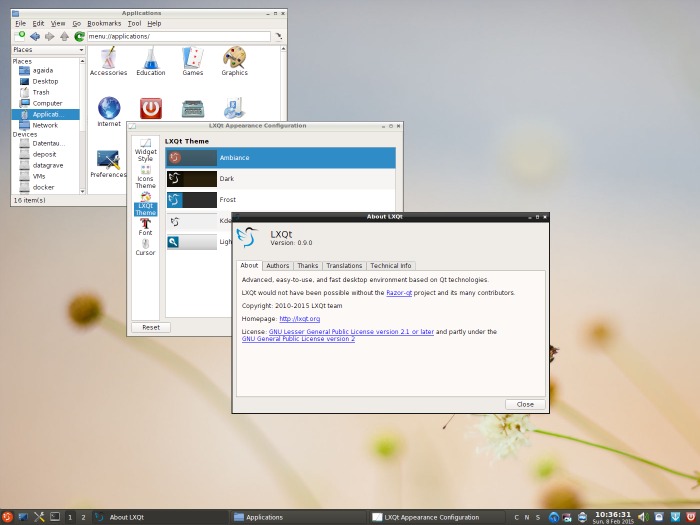
LXQT-Desktop-Screen

To install LXQt 0.9 run the following commands:

sudo add-apt-repository -y ppa:lubuntu-dev/lubuntu-daily
sudo apt-get update
sudo apt-get install lxqt-metapackage lxqt-panel openbox

The above command updates system package cache and installs LXQt.

Once the LXQT is installed, log out and log in to the system. Select “LXQt Desktop” session while logging in.

Tags: How to Install LXQt 0.9.0, How to Install LXQt 0.9.0 in Ubuntu 14.04, How to Install LXQt 0.9.0 in Ubuntu 14.10, Install LXQt Desktop Environment in Ubuntu 14.04, Lightweight Qt Desktop Environment, Linux Ubuntu LXQt Desktop Environment, LXQt Desktop Environment, Ubuntu 14.04, Ubuntu 14.10, Upgrade LXQt Desktop Environment

Primary Sidebar

Latest Posts

Delete Directory And Contents Recursively Without Prompt On Linux

Check User Login History In Ubuntu Linux Command Line

Use Locate Command To Find File In Linux Terminal By Name

How To Change Terminal Color In Ubuntu Command Line

How To Run Fsck Manually In Linux To Fix Unexpected Inconsistency

How To Fix Broken Packages On Ubuntu From Terminal

Re Execute The Previous Command In Linux Ubuntu Command Line

How Much RAM Is Needed For Ubuntu PC

How To Find Large Files And Directories In Linux Command Line

How To Use Clear Command History In Linux Terminal

© 2026 Source Digit • Linux, Ubuntu Tutorials & News, Technology, Gadgets & Gizmos

  • Home
  • About
  • Privacy Policy
  • Terms & Conditions
  • Contact Us
  • Sitemap